


Pultruded Carbon Fiber Strip
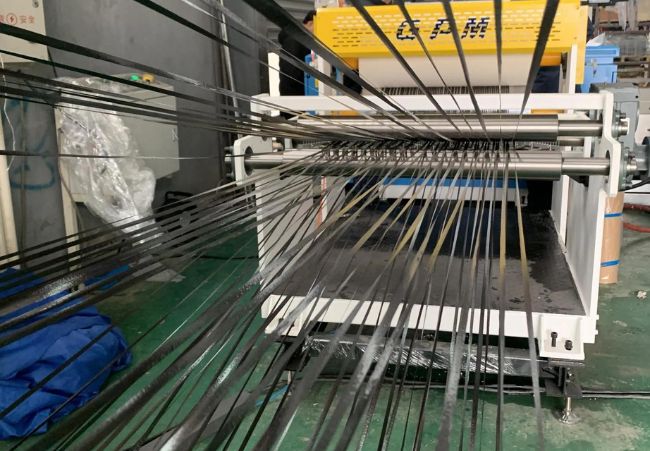
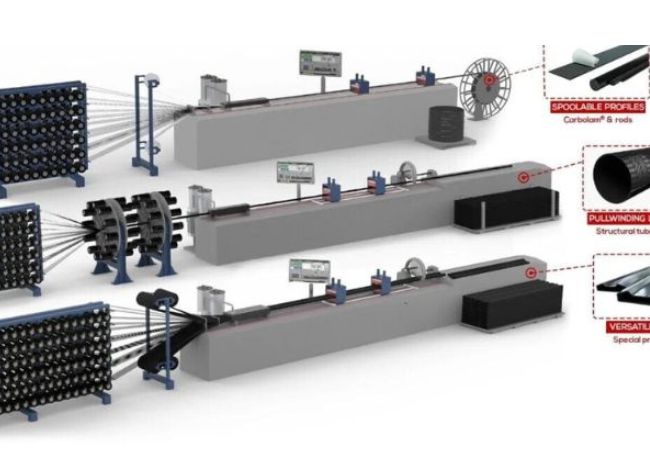
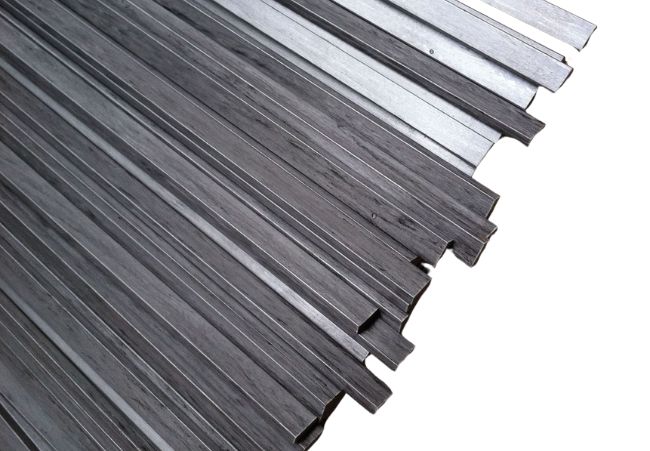
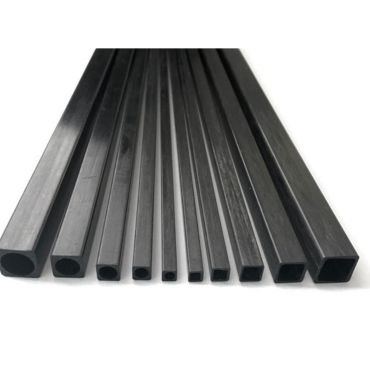
JCC carbon fiber strips are manufactured using the pultrusion process, specifically by pulling the continuous carbon fiber materials combined with an epoxy resin system through a heated forming die to cure.
With the excellent fatigue resistance, dimensional stability, chemical resistance and other characteristics, our carbon fiber strips are widely used in racing drones, RC helicopter wing, RC airplanes and fuselages, kite spars.
How is the Production Process of Carbon Fiber Strips?
JCC carbon fiber strips are manufactured using the pultrusion process with pulling the continuous carbon fiber materials combined with a resin matrix through a heated forming die. JCC can produce the continuous lengths of carbon fiber strip with constant cross-sections by this process. So our carbon fiber strip have high strength and stiffness, excellent fatigue resistance, dimensional stability, chemical resistance and other characteristics, which is widely used in various fields.
Wide Application for JCC Carbon Fiber Strips

The drones determine the carbon fiber strips must be lightweight, high strength and rigidity, corrosion resistant, durability, and precise manufacturability, that is exactly what JCC carbon fiber strips have.

JCC uses unique the pultrusion process when manufacture carbon fiber strip, which makes our strip has the properties of lightweight, high strength, durability and stability. With that, trekking poles and golf clubs have great performance.

JCC carbon fiber strips can produce the highly accurate and error-free accessories for aerospace, also our products has the advantage of high temperature and corrosion resistance which make they’re widely made in aerospace fields.
Specification of Carbon Fiber Sheet
- Data Sheet
|
Carbon Rods more than 0.156″ |
Carbon Rods less than 0.156″ |
||
| Tensile Strength | 250 ksi / 1.72 GPa | Tensile Strength | 320 ksi / 2.34 GPa |
| Tensile Modulus | 20.0 msi / 138 GPa | Tensile Modulus | 19.5 msi / 134 GPa |
| Ultimate Shear Strength | 6.0 ksi / 41.3 Mpa | Compressive Strength | 270 ksi / 1.90 GPa |
| Ultimate Tensile Strain | 1.50% | Compressive Modulus | 19.0 msi / 131 GPa |
| Flexural Strength | 265 ksi / 1.83 GPa | Fiber Volume | 67% |
| Flexural Modulus
Fiber Volume |
19.0 msi / 131 GPa
62% |
Ultimate Tensile Strain
Diameter Tolerance |
1.30%
+/-5% |
| Thermal Expansion Coefficient | -0.1 ppm/cm3 / -0.2 ppm/°C | Glass Transition Temperature | 100℃ |
| Density | 0.054 lbs/in3 / 1.5 g/cm3 | Matrix Material | Bis F Epoxy |
| Diameter Tolerance | +0.005 / -0.005″ | ||
| Glass Transition Temperature | 100℃ | ||
| Matrix Material | Bisphenol Epoxy Vinyl Ester |
 English
  Japanese
  German
  Spanish
  French
  Italian