


16 Advantages of Carbon Fiber Material for Wide Applications
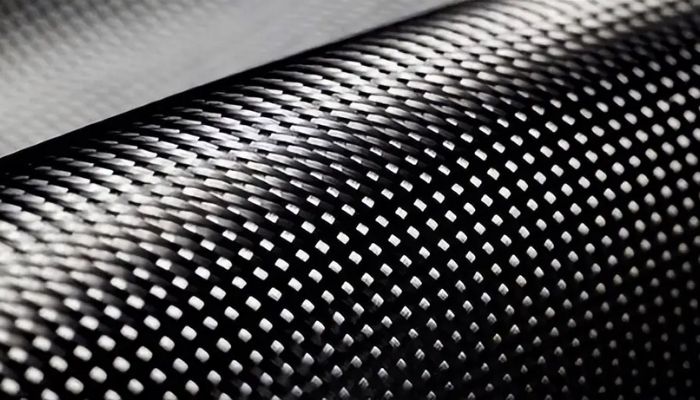
In the 21st century, with the rapid development of science and technology, carbon fiber has gradually become the first choice in aerospace, automobile manufacturing, industrial fields, electronics, outdoor sports equipment and other fields due to its excellent properties.
This lightweight, high-strength composite material is quietly changing our lifestyle and industrial production mode.
Our article will provide you with an in-depth analysis and explore many advantages of carbon fiber. Whether you’re a student who is eager for knowledge, a materials enthusiast who loves to explore, a materials engineer who pursues innovation, or an industry leader who has forward-thinking into opportunities, it will help you enrich your knowledge reserve. It can stimulate your creativity and gain insight into its application prospects in various fields, helping you seize opportunities in your career.
What is Carbon Fiber?
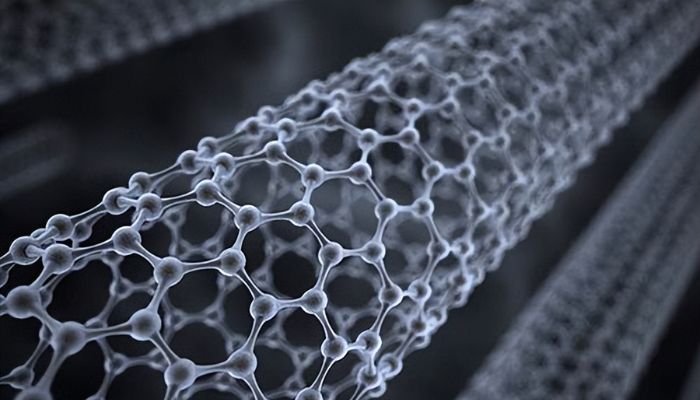
Carbon fiber is a new high-strength material with a carbon content of more than 90%. It is a long and thin filament composed of carbon atoms. Due to its excellent properties, it has become a raw material for composite materials.
Benefits of the Carbon Fiber
The advantages of carbon fiber are numerous, and its application range is constantly expanding.
Can be combined with other materials
Carbon fiber itself is brittle, but it can be combined with other materials to synthesize various higher strength reinforced composite materials, such as the composite carbon fiber material formed by combining with epoxy resin, the strength and rigidity are greatly improved. Combined with Kevlar, it provides superior impact resistance and toughness while maintaining excellent strength and lightweight. Combined with glass fiber, it can reduce costs and improve strength and rigidity. It also can be combined with aluminum, foam and aramid honeycomb to form a composite plate to achieve a shock-absorbing effect.
No rust
Carbon fiber is a non-metallic material composed of carbon elements, so it does not have the electrochemical conditions for chemical reactions with oxygen and water. Therefore, in very wet or soaked conditions, carbon fiber becomes a substitute for many metal materials.
Bioinert and X-ray permeable
The bio inertness of carbon fiber means that it can remain stable in the biological environment, does not occur or rarely reacts with human tissues, and won’t cause rejection or allergic reactions. Therefore, it can be applied in the medical field, such as prosthetics, artificial joint implants, tendon/ligament repair and other medical supplies. The X-ray permeability of carbon fiber refers to the strong penetration ability of X-rays through carbon fiber materials with less attenuation, will not interfere with the image quality, improve the imaging clarity and accuracy, and reduce radiation exposure. . Therefore, it has become an ideal material for CT bed board, X-ray inspection and other equipment and auxiliary equipment.
RF Shielding
Carbon fiber is composed of intertwined tiny fiber strands, forming an unaligned structure. It has excellent electrical conductivity in the direction parallel to the fiber. Therefore, under the action of electromagnetic waves, it can effectively reflect and absorb radio frequency signals, so as to achieve the effect of electromagnetic shielding. Its excellent properties have been widely used in various electronic products. For example, the casings of electronic products such as mobile phones, tablets, TVs, and computers can effectively prevent low-frequency electromagnetic wave interference. It can also be used in aerospace, automobile, shipbuilding and other industrial fields to effectively prevent the impact of low-frequency electromagnetic waves on mechanical equipment and improve the reliability and safety of the equipment.
Anisotropy and design flexibility
Carbon fiber composites are anisotropic and have different properties along the fiber direction and perpendicular to the fiber direction, which brings great freedom and flexibility to the design. Therefore, the elasticity and strength of the product can be changed by changing the fiber layering method (such as Ply orientation and Ply sequence) to meet the specific application requirements.
Lightweight
The low density of carbon fiber is one of its important characteristics. It is usually between 1.5-2.0g/cm³, half lighter than aluminum and only about a quarter of steel. The low density of carbon fiber makes carbon fiber products have significant advantages in weight reduction, so it can be widely used in the fuselage and wings of drones, car bodies, sports equipment such as bicycle racks, golf clubs, pickleball rackets, etc.
Good shock absorption
Composite panels made of carbon fiber and other materials, such as aramid, foam, aluminum, etc., have good shock-absorbing properties. They can produce shear strain or vertical strain under vibration, absorb excitation energy, reduce vibration energy, and achieve the effect of shock absorption. Therefore, carbon fiber is generally used in the aerospace and automotive fields to manufacture shock-absorbing panels, bodies, wings, sound equipment and other components to exert shock-absorbing properties.
High stiffness
Young’s modulus or elastic modulus is an important index to measure the stiffness of carbon fiber, indicating the ability of the material to resist its elastic deformation under the action of stress. The reinforced composite material formed by combining carbon fiber with epoxy resin has extremely high rigidity in the fiber direction, so it has become the best choice for aerospace, automobile manufacturing, medical, and industrial fields.
High tensile strength
High tensile strength is one of the important properties of carbon fiber, mainly due to its highly ordered and tightly arranged covalent bond network, which allows the carbon fiber to effectively resist external forces when being stretched, preventing it from being pulled into broken. The tensile strength value of carbon fiber can reach 1000-7000 MPa, which is much higher than traditional metal materials. Therefore, it is widely used in aircraft, rail transit vehicles, electric vehicles, power cables, pressure vessels, ultra-high-speed centrifuges, medical, and industrial equipment. , sports and sports equipment.
Good fatigue resistance
The carbon fiber composite material formed by combining carbon fiber with other materials has good load-bearing mechanical properties compared with other metals under alternating stress and long-term repeated cyclic loading. So carbon fiber materials play an important role in bicycle frames, golf clubs, fishing rods and other outdoor sports equipment.
High Chemical Resistance
The corrosion resistance of carbon fiber is mainly attributed to its special chemical composition and structural characteristics. It is mainly composed of hexagonally closely arranged carbon fibers to form a stable graphite layered structure, which is equivalent to a protective cover. Its excellent chemical inertness can resist corrosion from chemical substances at room temperature.
High-temperature Resistance
Carbon fiber materials have great high temperature resistance and can maintain dimensional stability at temperatures up to 2000°C-3000°C. As an enhancement of high-temperature resistance, carbon fiber provides efficient solutions for high-temperature components such as aircraft and rockets, automobile hoods, bicycle frames and other fields.
Good thermal conductivity
Carbon fiber is composed of thousands of micron-sized fiber filaments, which are linked through chemical bonds to form a stable network structure. This unique fiber structure can quickly transfer heat in the direction of the fiber, allowing the heat to be dissipated quickly. Therefore it has become popular in aerospace components, automotive engines and braking systems.
Low Thermal Conductivity
In the composite material formed after the combination of carbon fiber and resin, it has low thermal conductivity in the direction perpendicular to the fiber. This means that its surface temperature is relatively low, which is not easy to cause problems such as thermal stress corrosion and thermal fatigue, and can provide certain thermal insulation performance and higher stability. Therefore, in some special areas that require thermal insulation performance, such as ultra-high temperature thermal protection structure, environmental regulation in the space capsule, high temperature electromagnetic shielding, etc., the low heat conductivity of carbon fiber can better meet the needs.
Low thermal expansion
CTE – is a measure of how much a material expands and contracts when the temperature rises or falls. Carbon fiber has a low thermal expansion coefficient and will not bend or deform even in hot weather. It has high dimensional stability, so carbon fiber is used in missiles, aircraft brakes, etc. It is widely used in spacecraft components (solar panel brackets), space telescopes, optical instruments (surveying tripods and bipods), high-performance engine components (such as pistons, connecting rods) and other fields.
Eye-catching appearance and aesthetics
Carbon fiber has become a new star in the eyes of many designers because of its smooth and flat surface and exquisite and changeable patterns. It is combined with epoxy resin to form a reinforced composite material with a smooth surface, and is combined with glass fiber and Kevlar to form a carbon fiber fabric with various colors. gorgeous. We can also produce complex and changeable weaving methods such as plain weave, twill weave, checkerboard, football pattern, etc. according to your needs.
Disadvantages of Carbon Fiber
Although carbon fiber has been gradually accepted by most people because of its excellent properties, it still has disadvantages that cannot be ignored.
- High cost and high price:
Carbon fiber raw materials have high requirements for purity, complex manufacturing processes and strict parameter control, which makes the cost of carbon fiber remain high.
- Very brittle:
Carbon fiber is very brittle. The fiber layer in its structure is a sheet-like body formed by strong covalent bonds, and the sheet-like aggregates can easily cause cracks to propagate. When fibers bend, they break at extremely low strains.
- Difficulty in recycling and secondary use:
Due to technical limitations of carbon fiber recycling, high recycling costs, and secondary pollution generated during the recycling process, the recycling and utilization of carbon fiber is very difficult.
- Manufacturing complexity:
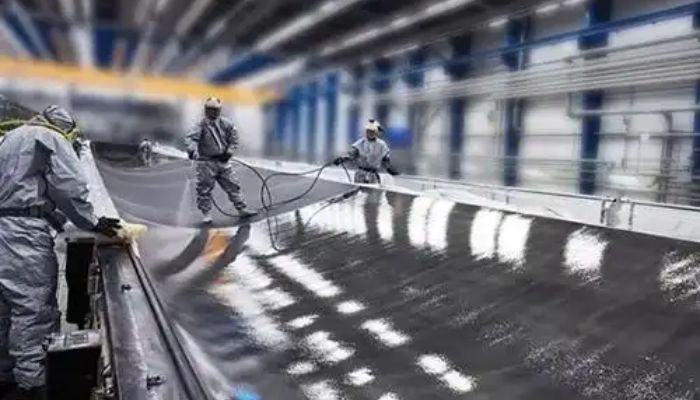
Many parts of carbon fiber are made of epoxy resin pre-impregnated carbon fiber. These materials require sub-zero storage and high-temperature curing as well as the use of vacuum bag technology, which all require large-scale manufacturing machinery to complete, resulting in manufacturing complexity. Greatly improved.
- Repair takes a long time:
Due to the special characteristics of carbon fiber materials, its repair process is relatively complex and very time-consuming. The repair steps require removing the surface paint layer of the damaged area first, and then gradiently polishing 4-5 layers of carbon fiber. Then cut the carbon fiber cloth with the same texture and size, saturate the fiber cloth with epoxy resin glue, and lay it up. Curing, grinding, surface treatment, such as spray painting, varnishing, grinding, polishing, etc.
Conclusion

As a new material with great performance, carbon fiber’s advantages have been fully demonstrated and applied in many fields. From ultra-high strength-to-weight ratio to excellent high temperature resistance, from excellent electrical and thermal conductivity to flexible customizability, carbon fiber is constantly changing the way we live and industrially produce.
By in-depth understanding of these advantages of carbon fiber, you can not only better understand the current trends in technological development, but also foresee the future development direction of materials science.
However, we should also be aware that despite its many advantages, carbon fiber may not be the best choice in some applications. Ultra-high production costs and difficulties in recycling are still factors restricting its wider application. Therefore, when choosing materials, we need to consider comprehensively and weigh the pros and cons.
Looking to the future, with the development of production technology and cost reduction, carbon fiber is expected to exert its unique advantages in more fields and promote technological innovation in various industries. We look forward to seeing more innovative applications based on carbon fiber, bringing more convenience and possibilities to human society.
 English
  Japanese
  German
  Spanish
  French
  Italian