


How is Carbon Fiber Manufactured?
As one of the brightest stars in the materials world, carbon fiber gradually stands out across various industries due to its excellent performance and wide applications. Its unique production process is a closely guarded secret among manufacturers. Whether you’re a curious newcomer, a materials engineer seeking technological breakthroughs, or an end user wanting deeper insights, this manufacturing guide will unravel its complex production process for you, detailing every step from raw material selection to final molding.
1. What is Carbon Fiber?
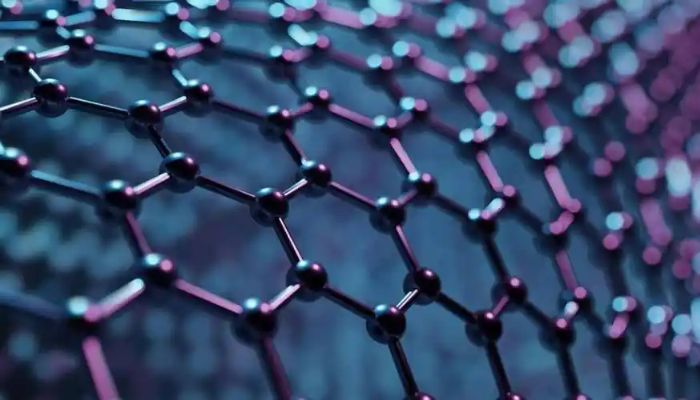
Carbon fiber, also known as graphite, is a high-modulus, high-strength carbon crystalline filament with a carbon content of over 90%. It is made from precursor polymers such as polyacrylonitrile (PAN), pitch, or rayon through high-temperature oxidation and carbonization. Carbon fiber appears as a flexible fibrous shape that can be woven into various fabrics. It’s mainly used in the production of carbon fiber composites.
2. What are Carbon Fiber Composites?
Carbon fiber composites refer to materials made from reinforcement like carbon fibers and a matrix such as epoxy resin, processed at high temperatures after pre-impregnation. These composites offer superior performance compared to individual materials. They are characterized by high strength, low density, high stiffness, corrosion resistance, and high temperature resistance, making them ideal for aerospace, automotive, medical, sports equipment, and industrial applications.
3. Properties and Applications of Carbon Fiber
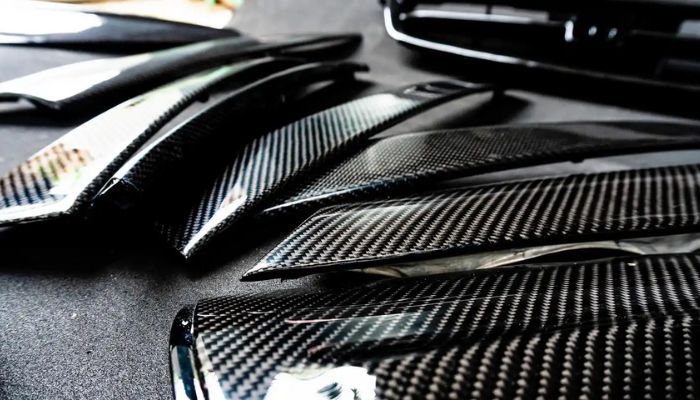
Many people only have a surface-level understanding and have not truly explored the secrets of carbon fiber properties. We will provide you with an in-depth analysis of the allure of its characteristics, offering strong support for your material selection and design innovation.
The superior characteristics of carbon fiber make it can be widely used in a variety of fields.
- High Strength: Carbon fiber tensile strength ranges from 3500 MPa to 6000 MPa, which is 5-7 times that of steel. This exceptional strength and stiffness make it ideal for aircraft bodies and wings, high-performance bicycle frames, tennis rackets, and golf clubs.
- Lightweight: With a density of about 1.6 to 2.0 g/cm³, carbon fiber is less than a quarter the density of steel (approximately 7.8 g/cm³). Its low density makes it play an important role in aerospace materials and automotive components.
- High Temperature Resistance: Carbon fiber can withstand temperatures over 2000°C without losing structural integrity, making it widely used in aerospace and industrial applications.
- Corrosion Resistance: It has excellent chemical resistance, maintaining stable performance in harsh environments, which makes it suitable for marine engineering and chemical equipment.
- Low Thermal Expansion: With the low coefficient of thermal expansion, carbon fiber is perfect for applications requiring high dimensional stability, such as precision surveying tripods/bipods, chip manufacturing equipment, and satellite components.
4. How is the Carbon Fiber Manufactured?
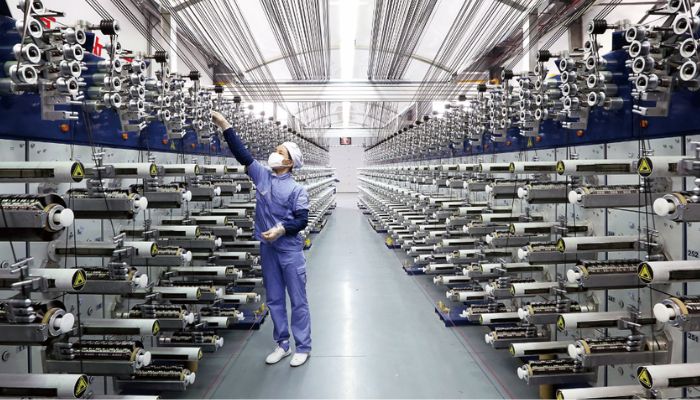
The carbon fiber manufacturing process includes:
- Precursor Preparation and Spinning: Mix the precursor fibers with other materials and spin them into long filament fibers, stretching them to form the initial fiber structure.
- Oxidation Stabilization: Heat the polymer filaments at 200-300°C in air for 30 minutes to 2 hours. This allows the fibers to absorb enough oxygen atoms from the air, stabilizing the fibrous structure.
- Carbonization: Heat the polymer filaments in an oxygen-free environment at 1000-3000°C. This removes most non-carbon atoms, leaving only a few carbon atoms, forming a tightly bonded carbon crystal structure.
- Surface Treatment: Oxidize or coat the fiber surface to improve bonding with materials like epoxy, enhancing composite performance.
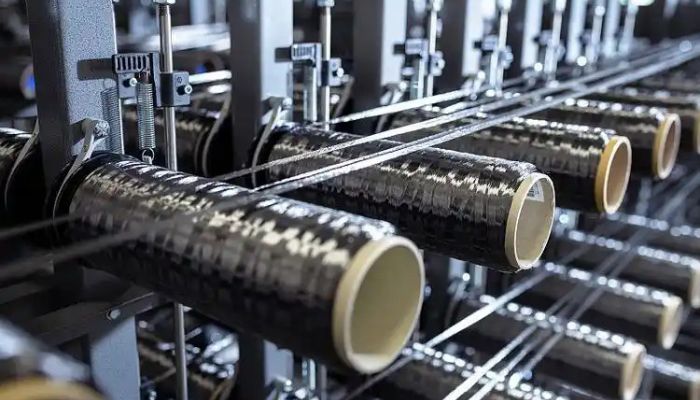
- Sizing and Winding: Apply a resin or chemical coating to protect the fibers during winding and processing. The treated fibers are wound onto spools for composite manufacturing.
5. Factors to consider
Despite being a first choice across many industries, it still has many factors that need to be considered, pay attention to these, and you will be able to choose and apply carbon fiber, let it serve you better.
- Cost: The complex manufacturing process and the need for large-scale equipment keep costs high, limiting widespread application. So reducing costs is a key area for future research.
- Recycling and Reuse: The technology for recycling and reusing carbon fiber is still underdeveloped. Reducing environmental impact and improving recycling processes are critical challenges.
- Manufacturing Process: The process is complex and time-consuming. Optimizing production to enhance efficiency and competitiveness is essential.
- Composite Development: While carbon fiber composites perform well, improving their integration with other materials remains a vital research direction.
6. Future Development
New Material Development: Innovating new carbon fiber materials to enhance strength, heat resistance, and conductivity to meet diverse needs.
- Automated Production: Implementing automated and smart manufacturing technologies to improve efficiency and consistency.
- Broader Applications: With reduced costs and improved performance, carbon fiber is expected to be used in more areas, such as wind turbine blades, aerospace components, and semiconductor manufacturing.
- Sustainability: Developing sustainable production and recycling technologies to achieve green applications.
- Emerging Markets: As demand for high-performance materials grows, carbon fiber has vast potential in emerging markets.
7. Summary:
As a high-performance material, carbon fiber is widely used in aerospace and automotive industries due to its exceptional properties. However, challenges like high costs, complex production, and recycling issues require ongoing attention. With advancements in material development, automated production, and sustainability, carbon fiber is poised for broader applications and significant potential in new markets. Addressing these challenges will drive industry upgrades and substantial contributions to society.
 English
  Japanese
  German
  Spanish
  French
  Italian