


About Carbon Fiber Strength–You should know
Because of its unique property–high strength, carbon fiber became the first choice for many industries. But do you know how strong it is? When you seek the right material for your project or solution, can you see the secret of carbon fiber strength?
Read this guide to help you understand the different application fields of carbon fiber strength information. Let’s discuss it.
1. What is Carbon Fiber?
Carbon fiber is formed by high-temperature carbonization of Polymer organic compounds(Pan, Petroleum asphalt, or viscose). It’s a high-strength and high-modulus fiber filament with more than 90% carbon content. These high-strength carbon crystal fiber tows are weaved into carbon fiber fabric, which is then prepreg in epoxy resin, a sticky thermosetting polymer. The fabric is then formed into carbon fiber sheets, tubes, or parts, which are firmer.

2. What Makes Carbon Fiber So Strong?
First of all, it depends mainly on the unique chain-like molecular structure of carbon fiber, which consists mainly of carbon atoms arranged in a graphite-like structure to form a solid hexagonal crystal structure. Strong covalent bonds link together these carbon atoms to form a large molecular chain. This arrangement means that carbon fiber itself has extremely high tensile strength and rigidity while remaining lightweight. However, when it is impregnated with thermal polymer matrices such as epoxy resin, the reinforced composite material formed by high-temperature curing is laminated according to different angles and directions, which not only maintains the tensile strength of carbon fibers, but also improves their original brittleness, making the composite part sturdy, and achieves the effect of 1+1 being greater than 2.
3. Measures of Carbon Fiber Strength
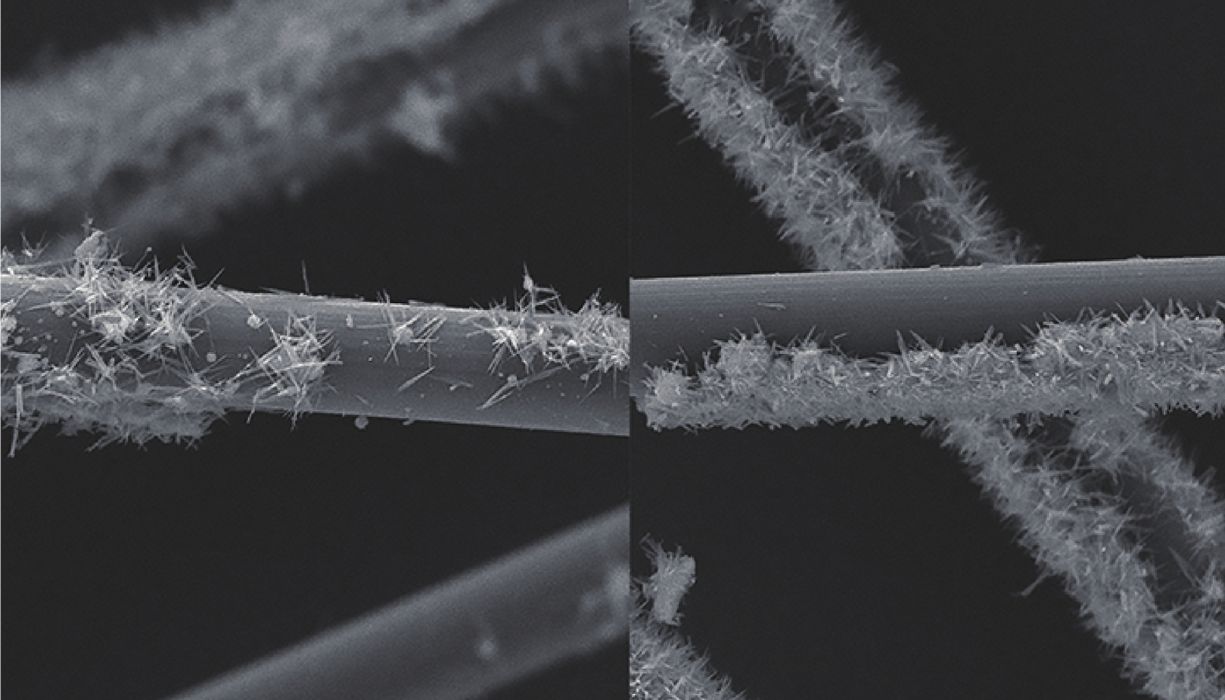
Carbon fiber strength is the maximum force per unit area that a carbon fiber can withstand without fracture or elastic deformation when subjected to external tensile or compressive processes.
Tensile strength and modulus of elasticity are two key indicators of carbon fiber strength and are measured in megapascals (MPa) or gigapascals (GPa), respectively.
Tensile Strength: Carbon fiber can resist its breakage when subjected to tensile load. The tensile strength of carbon fiber is usually above 3500MPa, which is 7-9 times higher than that of steel.
Modulus of elasticity: It refers to the ratio of stress to strain per unit area of carbon fiber when it is subjected to external force, where strain is the amount of deformation produced by an object when it is subjected to external force, and stress is the magnitude of external force per unit area.
Modulus of elasticity is a measure of the ability of a material to resist deformation when subjected to external forces, reflecting the stiffness of the material. The modulus of elasticity of carbon fiber is usually above 230 GPa, which means that it can maintain its shape when subjected to external forces and has excellent resistance to deformation.
4. Carbon Fiber Strength Compared to Other Materials.
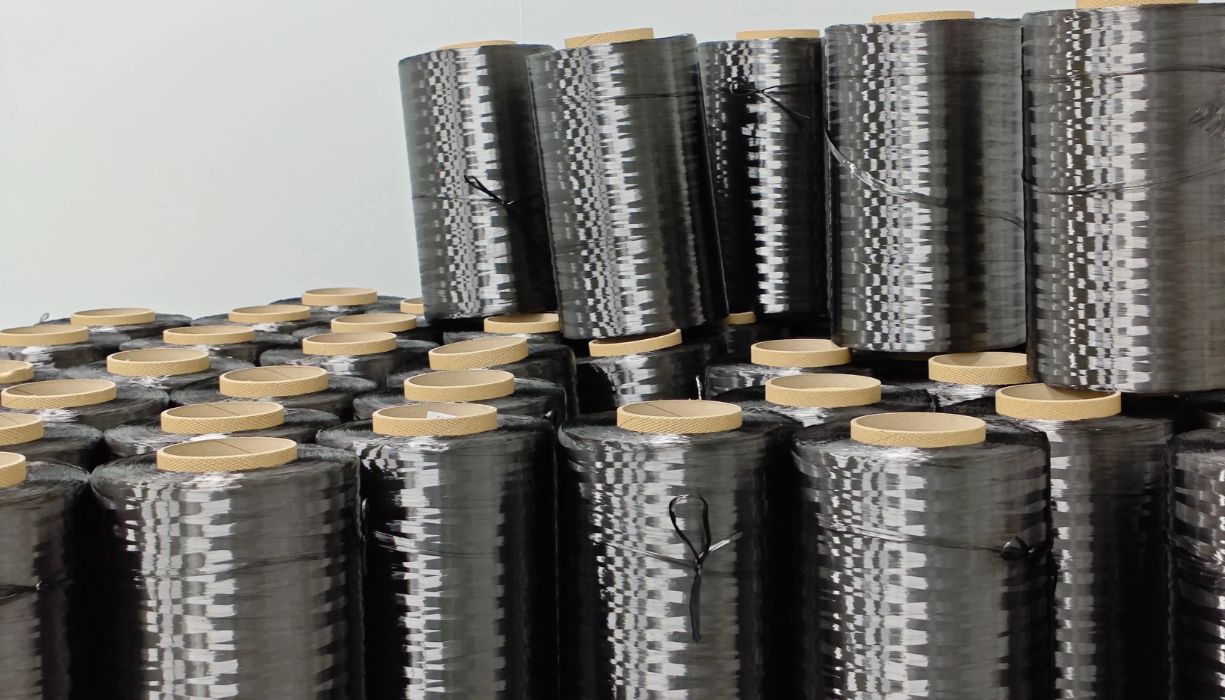
Carbon fiber is five times stronger and twice as hard as steel, but only 1/4 the density of steel, making it the ideal material for many high-strength, lightweight needs, with significant weight and strength advantages.
A. Is carbon fiber stronger than aluminum?
Carbon fiber has a tensile strength of about 7,000 MPa, while aluminum alloys typically reach 700 MPa, making it 5-10 times stronger than aluminum. The modulus of elasticity of carbon fiber is about 200 to 350 GPa, compared to 69 to 79 GPa for aluminum alloys, so carbon fiber is 2 to 5 times stiffer than aluminum. Taken together, carbon fiber is much stronger than aluminum.
B. Is carbon fiber stronger than steel?
The low density of carbon fiber makes it one-fifth the weight of steel, but seven to ten times stronger. This means that for the same specification of strength, choosing carbon fiber can significantly reduce the weight of a structure, which is especially important for applications where you need to be lightweight. Carbon fiber’s high modulus also allows it to perform well when subjected to dynamic continuous loads, providing superior fatigue resistance.
C. Is carbon fiber stronger than titanium?
The high anisotropy of carbon fibers gives them high strength in specific directions, making them stronger than titanium. And in terms of stiffness and density, carbon fiber is likewise superior to titanium.
5. Factors affecting the strength of carbon fibers
A. Quality and Type of Carbon Fiber:
The quality of the individual carbon fiber determines the quality of the overall carbon fiber composite material. The higher the modulus, the higher the strength of a high-quality carbon fiber with a long tow.
B. Resin system:
Thermosetting resin combined with carbon fiber will make the carbon fiber stronger, so the type, quality, content, and curing characteristics of resin directly or indirectly affect the strength of composite carbon fiber, to have different strengths of carbon fiber, the choice of resin is equally important to you.
C. Fiber Direction and Layup Design:
Carbon fiber is woven into carbon fiber cloth from tows, different weaving methods will also affect the strength of the carbon fiber, and further processing, and epoxy resin prepreg composite, different layup directions will also make the strength different, you can choose 0°/+-45°/+-90° and other cross-layups to change the strength of the carbon fiber to achieve the material properties you need. You can choose 0°/+-45°/+-90° cross-layers to change the strength of carbon fiber to achieve your desired material properties.
D. Manufacturing process:
We all know that the manufacturing process plays a decisive role in the performance of composite materials, when manufacturing composite carbon fiber materials, you can control the quality of prepreg, composite curing time, precise control of temperature, application of pressure and vacuum-assisted processes, master the cooling rate so that the strength of the carbon fiber materials in line with your application needs.
6. Applications that utilize the strength of carbon fibers
Aerospace Field: In the application of drones and aircraft, the high strength-to-weight ratio of carbon fiber can offer you lighter structures with higher safety performance and improved fuel efficiency.
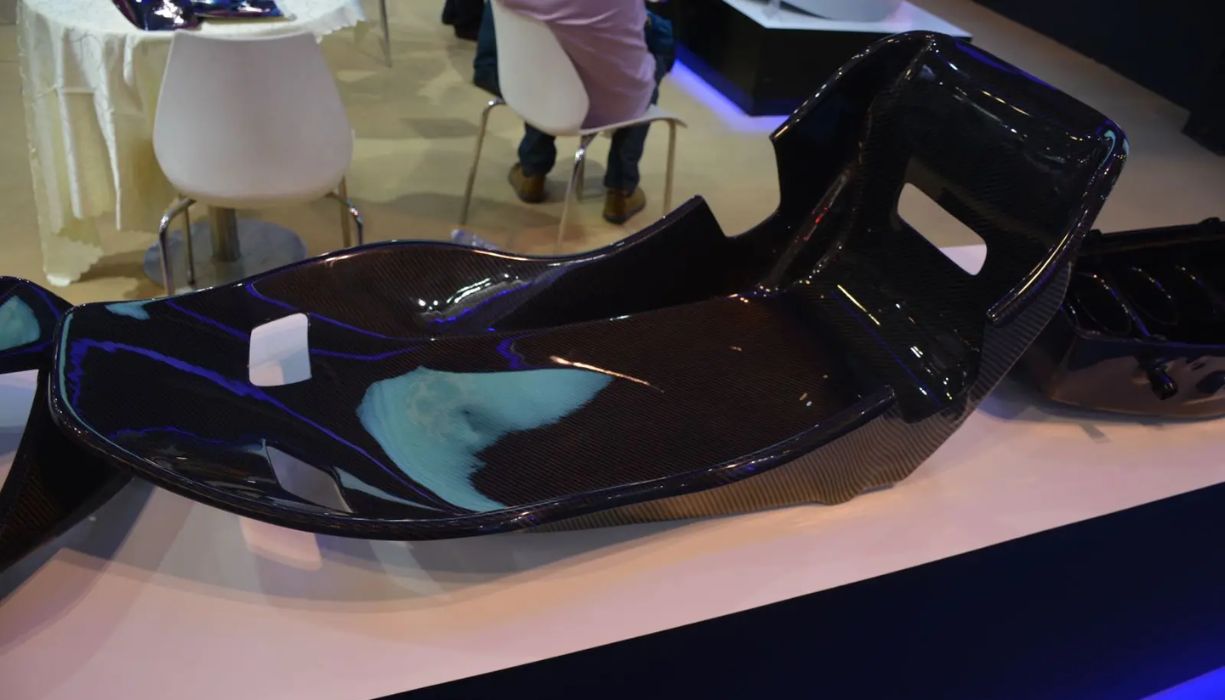
Automotive Industry: Carbon fiber parts are mainly used in high-performance cars, their low density will make your car parts lighter, and their high strength and stiffness will make the car shape more robust, and improve safety standards.
Outdoor Sports Equipment: From paddles to trekking poles and bicycles, the high strength and low density of carbon fiber has helped you improve and design your sports equipment, allowing for better performance and reducing user fatigue.
Medical Industry: The high strength and weight of carbon fiber and the inertness of the metal have allowed it to be used in a wide range of medical equipment such as prosthetics, x-ray scanning equipment, wheelchairs, and surgical beds.
7. Conclusion
Carbon fiber’s superior properties provide a combination of high tensile strength, high stiffness, and low weight that exceeds most traditional materials. With its ability to be tailored to your specific application, carbon fiber can be your first choice whether you are in aerospace, automotive manufacturing, medical supplies, or any industry that requires a high-performance material.
 English
  Japanese
  German
  Spanish
  French
  Italian