


The Overview of Epoxy Resins
Epoxy resin, as a matrix for reinforced composites, is widely used in a various fields and industries because of its excellent adhesion to a wide range of materials and good mechanical and chemical properties.
In this guide, we will discuss in depth the properties, applications, and composites of epoxy resin with carbon fiber, to provide guidance and assistance in reinforced composites projects and applications for you.
1. What are Epoxy Resins?

Epoxy resins, also known as polyepoxides, are a class of polymers that contain more than two epoxy groups. It is most often produced by the reaction of epichlorohydrin with bisphenol A. The Epoxy resin is a polymer with two or more epoxy groups. The presence of secondary hydroxyl and epoxy groups in the molecular structure makes epoxy resins highly adhesive to a wide range of substances.
2. History of Epoxy Resins
In 1943, German scientist Paul Schlack succeeded in creating polymers utilizing amine compounds. Then in 1946 Swiss scientist Pierre Castan published a patent for liquid epoxy resins that could be cured, revealing their superb adhesive properties. These research and developments propelled the first industrial production of epoxy resins by an American company in 1947.
3. Types of Epoxy Resins
Epoxy resins can be divided into the following styles according to their molecular structure:
Bisphenol Epoxy Resins:
Its generic form is Bisphenol A Epoxy Resin, commonly known as BPA Epoxy Resin, which is the most widely used. Because of its excellent mechanical properties, high adhesion, and chemical resistance, it is widely used as an adhesive and reinforcing matrix in construction, aerospace, automotive manufacturing (carbon fiber prepregs), and anti-corrosion coatings for ships and bridges.
Cycloaliphatic Epoxy Resin:
It’s mainly made of alicyclic olefins epoxidized with peroxides. It’s resistant to high temperatures, ultraviolet rays, and chemical corrosion, and can still maintain good mechanical properties after long-term exposure to the outdoors.
Aliphatic Epoxy Resins:
They contain an aliphatic chain structure and are mainly composed of aliphatic olefins epoxidized with peroxides. They have high flexibility, impact resistance, and resistance to low temperatures.
Novolac epoxy resins:
They are made by condensation reaction of linear phenolic resins with epichlorohydrin in an alkaline environment. The resins after curing have a high cross-link density, good mechanical properties, heat resistance, and chemical stability.
Glycidylamine epoxy resin:
It contains amine groups and is mainly formed by the polyamine polycondensation reaction with epichlorohydrin. After curing, it has high heat resistance and superior mechanical properties. It and carbon fiber, glass fiber, and other materials form a composite material after composite which is mainly used in aerospace and high-performance automotive manufacturing
Halogenated epoxy resins:
Its molecular chain contains halogen elements, so it has good chemical resistance, electrical insulation properties, and arc resistance. Suitable for high voltage and high-temperature environments, used in coatings, adhesives, and electronic packaging.
Epoxy resin diluents:
They are often called reactive diluents and are generally used to dilute epoxy resins. Because they contain epoxy groups that act to dilute epoxy resins while also participating in the epoxy curing process. By adding diluents, you can adjust the formulation of epoxy resins to improve their flow, viscosity, and curing speed to meet your different application needs.
The most innovative application of epoxy resin is composite with carbon fiber to form reinforced composites. Therefore, when you choose it as the matrix material of the composites, you need to comprehensively consider the application field of your project and the required mechanical properties, the epoxy resin curing conditions, and the cost. You also need to consider the type of carbon fiber and the design of the layup.
4. Epoxy Resin Properties
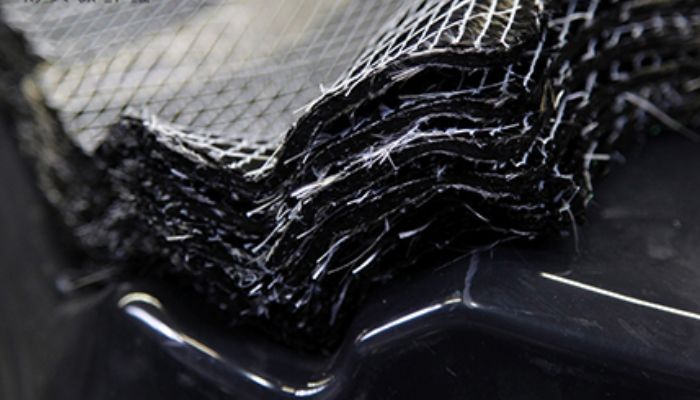
The main properties of epoxy resin are as follows:
Excellent mechanical properties:
cured epoxy resin has excellent tensile strength, compressive strength and hardness, and high resistance to bending.
Good corrosion resistance:
the special molecular structure of epoxy resin leads to its resistance to most chemical solvents such as acids, alkalis, and solvents, and at the same time, it has good stability in the humidity environment.
Excellent electrical insulation properties:
with high electrical insulation properties, it is suitable for high-frequency circuits and electronic encapsulation materials.
Good adhesion properties:
Due to the special epoxy groups in its molecular structure, it has good adhesion properties to carbon fiber, glass fiber, Kevlar, plastics, metal, wood, and many other materials. It’s an excellent choice for the manufacture of reinforced composite materials.
Radiation and high-temperature resistance:
It has good resistance to high temperature, ultraviolet rays and aging, and is suitable for long-term exposure to outdoor applications.
Anti-fatigue:
Epoxy resin has good anti-fatigue properties after composite curing with many materials such as carbon fiber and glass fiber, which can resist repeated stress and cyclic loading in long-term environment and still maintain stable performance.
5. Epoxy Resin Applications

Epoxy resin has become an indispensable basic thermosetting material in many fields due to its special chemical structure and therefore good adhesion, high-temperature resistance, chemical resistance, and other properties. Therefore, a full understanding of its application can help you grasp the needs of your project more accurately.
Adhesives:
Due to its excellent adhesion, epoxy resin can be used for bonding metals, plastics, wood, ceramics, glass, etc. For example, it can be used as an adhesive for joining multiple structural parts of airplanes, drones, and rockets to ensure structural firmness and stability.
Coatings and sealants:
Due to its stable chemical properties, epoxy resin plays an important role in anti-corrosion and oxidation coatings and sealants. Its paint film produced as raw material has strong adhesion, so it is used in large quantities for anticorrosive coatings and sealants on the surface layer of outdoor equipment and steel structures exposed for a long period, which can effectively prevent oxidation and rusting on the surface of the equipment and prolong the service life of the equipment.
Electronic encapsulation:
It has high electrical insulation, chemical stability, and fluidity, and is easy to process. This makes it play an important role in the encapsulation and potting of electronic components, such as integrated circuit encapsulation, LED encapsulation, electromagnetic shielding, and other fields.
Material reinforcement:
Epoxy resin can also be used as a matrix resin for the manufacture of carbon fiber, Kevlar, and glass fiber-reinforced composites. This will enhance the mechanical properties of the material greatly enhanced, such as composite laminates, and reinforced composite structural components manufacturing. These materials are characterized by high strength, lightweight, and chemical resistance. They are therefore widely used in aerospace, automotive manufacturing, sports equipment, medical equipment, and industrial manufacturing.
6. Composite of Epoxy Resin and Carbon Fiber – Performance Enhancement

The composite application of epoxy resins and carbon fibers is a major innovation in materials, making the reinforced composites much stronger. The following are the advantages of their application.
Porosity Reduction
Your choice of general purpose bisphenol A based epoxy resin can be used as an adhesive for carbon fiber composites. The high fluidity epoxy resin will reduce the porosity of carbon fiber to 1% after fully infiltrating the carbon fiber bundle. Thus, the stress of the resin will be evenly distributed, improving the tensile strength, avoiding localized fracture of the composite and reducing the cost.
Strengthen of mechanical properties:
You can change the formula of epoxy resin to enhance the physical properties of carbon fiber composites, for example, the modification of toughening properties can enhance the impact resistance of the reinforced composites, which are mainly used in high-performance racing parts, sports equipment and protective equipment.
Upgrading of high-temperature resistance:
You can choose bis maleimide to enhance the temperature resistance of reinforced composite structural parts, ensuring the stability of structural parts at high temperatures.
Improve efficiency:
Epoxy resins can also shorten the curing time of carbon fiber parts and components, greatly reducing cycle time and increasing your productivity.
7. Limitations of Epoxy Resin with Carbon Fiber Composites
A. Unstable quality:
Due to the complexity and instability of the process during the preparation of carbon fiber composites, problems such as material bubble porosity, delamination fracture, burr, and debonding may occur. These defects reduce the strength of the material, making the mechanical properties of the whole structure affected.
B. High cost:
The manufacturing cost of carbon fiber composites is too high, requiring large-scale production equipment and high-temperature and high-pressure processes, with high energy consumption. And the composites are more brittle, which invariably increases the cost of use.
C. Environmental pressure:
Due to the curing cross-linking of thermosetting matrix resin in composite carbon fiber materials, it cannot be melted and plasticized, and it is difficult to extract and inefficient, which increases the difficulty of recycling. And there is no professional recycling technology, equipment and place, which puts pressure on environmental protection.
8. Summary:
With in-depth knowledge and understanding of epoxy resins, you will break through the performance limitations of carbon fiber composites and provide effective and reliable technical guidance for your projects.
We will provide full-process support from resin selection to process optimization of carbon fiber composite, helping you to improve material performance and product competitiveness. Click me to get a free resin adaptation program for you soon!
 English
  Japanese
  German
  Spanish
  French
  Italian