


Carbon Fiber Material-The Ultimate Guide for Beginner and Expert
Carbon fiber materials are widely used because of their superior properties. However, many people have limited knowledge of this high-performance material. This guide will parse in-depth about carbon fiber from its history, properties, advantages and disadvantages, production processes, and applications. It is designed to help you gain a deeper understanding of carbon fiber and better serve your projects and industry.
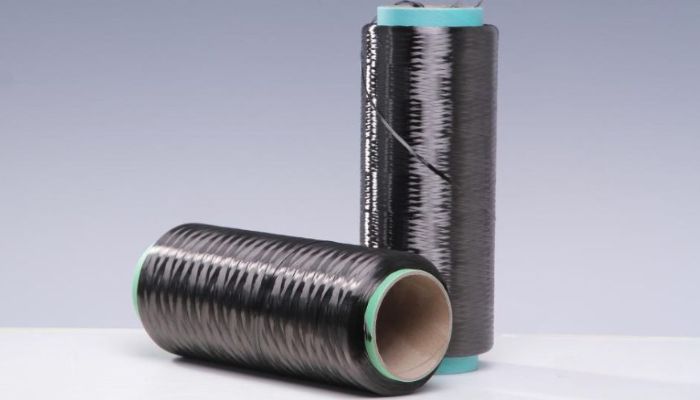
1. What is Carbon Fiber?
Carbon fiber, also named graphite fiber, is a high-performance fiber containing more than 90% carbon. A fibrous structure consisting of elongated carbon crystal filaments. It consists of thin bundles of fibers made from precursor polymers (such as PAN, rayon, or petroleum asphalt) that are oxidized at low temperatures and carbonized at high temperatures.
2. The History of Carbon Fiber
Carbon fiber has existed for over 150 years since it was invented by Joseph Swan in 1860. After about a century of development, in 1960, HI Thompson Fiberglas Company invented a new process that gradually improved and optimized the properties of carbon fiber materials. Since the 21st century, carbon fiber has been increasingly used in various high-tech fields for its excellent strength-to-weight ratio and high-temperature resistance.
3. How is Carbon Fiber Made?
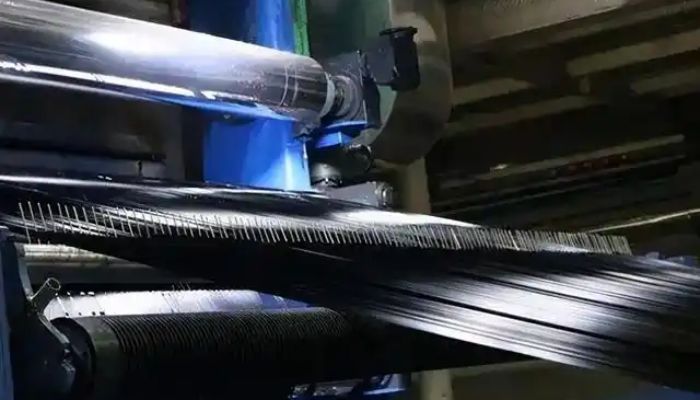
Although a century and a half has passed since the invention of carbon fiber, most people still know little about its production process. Because of its core trade secrets, many producers keep the manufacturing process a closely guarded secret. We will give you a detailed overview of the production process of carbon fiber. This will provide you with technical guidance and support to make the best use of it.
Because carbon fibers are often made into composites for a wide range of applications, their production process is generally divided into two parts:
Raw Filament Preparation: involves complex physical and chemical processes.
- Precursor Preparation – Spinning: Precursor polymers such as PAN, rayon, or asphalt are spun to form thread-like carbon fiber tows.
- Oxidation and Stabilization: The filaments are heated in a stable oxygen-containing environment to about 300-500°C. This will destroy the hydrogen atoms and make the oxygen atoms more stable.
- Carbonization: The oxidized carbon fibers are further carbonized at high temperatures (about 2000°C) in an inert gas atmosphere. This results in a further increase in strength
- Surface Finish: Carbonized carbon fibers have a very smooth surface. To bond better with epoxy or other resins, it needs to be activated.
- Sizing and Winding: The carbon fiber filament surface is very fragile, so it is coated with resin to protect its surface and finally wound onto a spool for further processing.
Manufacturing of carbon fiber composites:
- Pre-impregnation: Carbon fiber fabric, or tow, needs to be pre-impregnated with epoxy resin, a thermosetting material, to ensure that the resin infiltrates into the gaps of the fiber tow.
- High Temperature Forming: The pre-impregnated carbon fiber fabric needs to go through Pultrusion forming, wrapped process, filament winding forming, hot press can forming, RTM/vacuum bagging forming, press forming, and oven forming.
Finally, it can be made:
- Carbon fiber plate &panels&boards
- Carbon fiber tube
- Carbon fiber rods
- Carbon fiber parts, components, and profiles: such as octagonal tubes, hexagonal tubes, drone parts, automotive parts, bicycle frames, and various shaped tubes.
4. Advantages and Disadvantages
A full understanding of carbon fiber’s advantages and disadvantages can help you better avoid risks in product development, design, production, etc., and improve your product performance.
Advantages
- Low density: Its density is about 1.5-1.8g/cm³, only 1/3 of aluminum, so its weight is much lower than other metals.
- High strength and stiffness: It can withstand external tensile and extrusion loads without deformation and bending.
- Chemical Resistance: Carbon fiber can remain stable and non-corrosive in multiple acid and alkali environments, and is suitable for various humid and harsh environments.
- Fatigue Resistance: Carbon fiber can withstand reciprocating cyclic stress loads without deformation or significant degradation in performance.
- High-Temperature Resistance: Stable in environments up to 2000℃.
- Low Thermal Expansion: Studies have shown it is dimensionally stable at extremely low and high temperatures.
The carbon fiber advantages are unquestionable, but it also has many disadvantages that limit subsequent development.
- High Cost: Due to its raw material cost is high, a complex production process, and high energy consumption. This also leads to the high cost of carbon fiber fabric.
- Recycling difficulty: There is no mature recycling technology and equipment, which makes the recycling of carbon fiber more difficult. The strength of recycled carbon fiber also cannot be reached by the previous one.
- Processing difficulties: Carbon fiber requires two processes: raw silk production and composite material production, each of which is very difficult and demanding.
5. Types of Carbon Fiber
Carbon fiber comes in many varieties, and their classification standards are multi-dimensional. You can choose suitable carbon fiber products based on your industry and project needs.
Based on Raw Filament Material:
- PAN-based carbon fiber: This is the most common type, carbonized from PAN.
- Asphalt-based carbon fiber: Carbonized from petroleum or coal tar asphalt precursors.
- Rayon-based carbon fiber: Made from rayon (viscose fiber).
Tensile Modulus Based on Performance:
- Standard elastic modulus carbon fiber (HS): Elastic modulus 240-300 GPa, tensile strength estimated at least 2,500 MPa or above.
- Intermediate modulus carbon fiber (IM): Elastic modulus 300-350 GPa, tensile strength equal to or exceeding 3,500 MPa.
- High modulus carbon fiber (HM): Elastic modulus 350-500 GPa, tensile strength at least 2,500 MPa.
- Ultra-high modulus carbon fiber (UHM): Elastic modulus >500 GPa, tensile strength 2,500 MPa or above.
By Fiber Form:
- Continuous carbon fiber filament: Typically exists in the form of yarn or fabric and is used for composite material applications.
- Chopped carbon fiber: Usually a few millimeters or centimeters in length, used for molding or injection molding.
- Carbon fiber mat: Made of randomly arranged short fibers, typically in a non-woven state.
Carbon fiber fabrics Based on Weave Types:
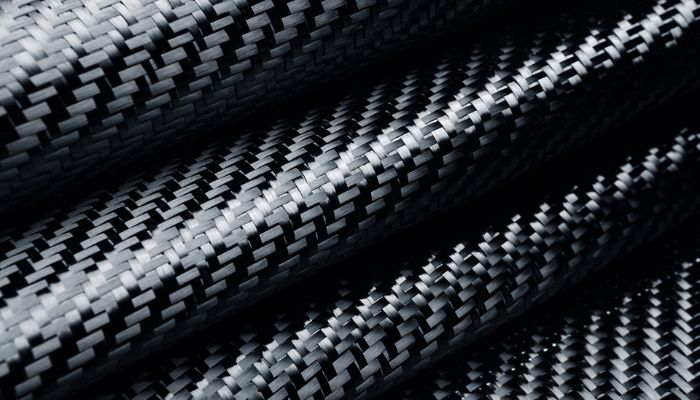
- Twill weave: Presents a diagonal pattern, and has better draping properties.
- Plain weave: A simple weaving method with interlacing warp and weft, chessboard pattern, good stability, and easy to handle.
Satin Weave: Smooth surface, lustrous, suitable for complex curved surfaces.
6. Multiple Applications of Carbon Fiber Material
Carbon fiber as a high-quality advanced composite material, with its unique excellent performance and growing market demand, is expanding its range of applications in various fields from high-tech to daily life. Our carbon fiber application guide can provide new exploration directions for your R&D team and help you better understand and meet customer demands for high-strength, lightweight carbon fiber products.
- Aerospace: Such as UAV bodies and propellers, spacecraft structural components and thermal protection systems
- Automotive: Car parts like body panels and chassis, drive shafts and suspension systems
- Medical devices: X-ray machine supports and beds, prosthetics and orthotics
- Outdoor sports equipment: Bicycle components, trekking poles, ski poles, oars
- Industrial equipment: Such as robotic arms, robot parts, and tripods for surveying and shooting.
7. Conclusion
Carbon fiber’s unique lightweight, high-strength characteristics, make it in the aerospace, automotive manufacturing, medical equipment, and other fields, despite the high cost, production process difficulties, and other limitations, but it has been in a variety of high-tech fields to occupy a place, therefore, choose carbon fiber materials as your project or field, will greatly enhance the performance of your products.
FAQ:
1.Does carbon fiber rust?
Because it is mainly composed of carbon and does not contain metals and other rust-prone elements, carbon fiber is not easy to rust and has excellent corrosion resistance.
2. Is carbon fiber a composite material?
Carbon fiber itself is a single material, not a composite. However, it is typically combined with thermosetting polymers (such as epoxy resin) to manufacture composite materials
3. What is carbon fiber composite?
Carbon fiber composites, also known as carbon fiber reinforced polymers, are high-strength reinforced composite materials formed by processing carbon fiber substrate and thermoplastic polymers (such as epoxy resin) at high temperatures.
4. What are the potential performance of carbon fiber composites?
CFRP materials stand out among many others due to their excellent high strength-to-weight ratio, high tensile strength & stiffness, and resistance to high temperatures & corrosion.
5. What is the manufacturing process for carbon fiber composites?
Carbon fiber composite manufacturing methods include prepreg, resin transfer molding, vacuum bagging, compression molding, pultrusion, and filament winding.
More resources
https://en.wikipedia.org/wiki/Carbon_fibers –Resource from Wikipedia
https://www.sciencedirect.com/topics/materials-science/carbon-fiber –Resource from Sicencedirect
 English
  Japanese
  German
  Spanish
  French
  Italian