


Carbon Fiber vs Aluminum– Which One is Best for Your Project?

Carbon fiber and aluminum are indispensable two materials for modern industry. Carbon fiber wins in terms of ultra-high strength-to-weight ratio and fatigue resistance, while aluminum is superior in terms of low cost, ease of processing, and recyclability.
This article will offer you a comprehensive analysis of their properties, production processes, costs, advantages & disadvantages, and applications for carbon fiber and aluminum. To help you choose and decide the material that best suits the performance of your product and project.
1. Definition of Carbon Fiber and Aluminum
Carbon fiber: is a high-modulus, high-performance polymer containing more than 90% carbon. It has the characteristics of low density, high strength, and chemical resistance. Composite with epoxy resin to form a reinforcing material strength will be greatly doubled.
Aluminum: is a light metal. It is often used as a base material to join alloy materials such as zinc, copper, magnesium, etc. to form aluminum alloy materials. Such as high-strength 7075 aviation-grade aluminum alloy materials. It has the advantages of low cost, low density, and good electrical conductivity.
2. Performance Comparison
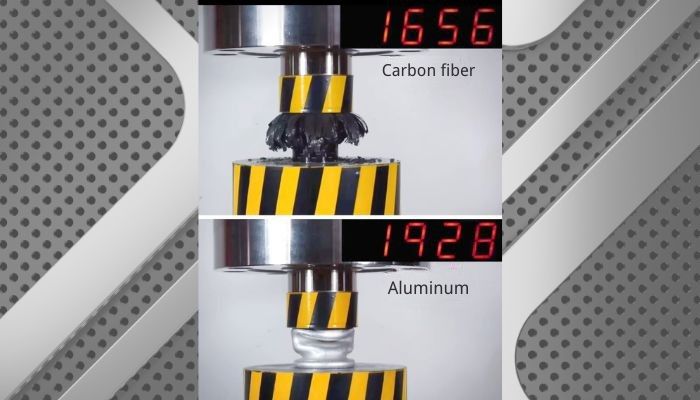
The following are definitions of the different performance indicators:
- Modulus of elasticity (E) GPa: expresses the stiffness of a material. It is an index that measures the ability of a material to resist material deformation. It describes the relationship between stress and strain during the elastic deformation phase of a material.
- Tensile Strength (σ) MPa: It indicates the ability of a material to resist fracture under an external tensile load.
- Density (ρ) g/cm3: is a measure of weight and refers to mass per unit volume.
- Specific Stiffness (E/ρ): is the ratio of the modulus of elasticity of a material to its density.
| Performance index | Carbon fiber | Aluminum | Results |
| Density(g/cm³) | 1.5-2.0 | 2.8 | carbon fiber(lighter 30-40% than aluminum) |
| Elasticity Modulus: (E)GPa | 240-500 | 69-79 | carbon fiber(3-6 times than aluminum) |
| Tensile Strength(σ)MPa | 4900-7000(T700) | 570(7075-T6) | carbon fiber(10+ time than aluminum) |
| Specific Stiffness(E/ρ) | 3200-3800 | 203 | carbon fiber(20+ times than aluminum) |
| Fatigue Resistance | Good (can withstand cyclic load and maintain stability | Slightly worse (prone to fatigue fracture) | carbon fiber |
| Corrosion Resistance | Good (resistant to corrosion in humid and acid-alkali environments) | Poor (anodizing reaction and anti-corrosion coating required) | carbon fiber |
| Electrical Conductivity(S/m
) |
106 | 650-1000 | Aluminum(10 times, but carbon fiber is relatively stable ) |
| Thermal Expansion Coefficient(m/K) | -0.5×10^-6/K to 7.1-10.5×10^-6/℃ | 2.0×10^-5/℃ | Carbon fiber(low thermal expansion makes the size more stable when the temperature changes) |
| Thermal Conductivity(W/m·K) | 10-60 | 150-205 | Aluminum(3-10 times than carbon fiber) |
From the above indicators, carbon fiber is superior to aluminum in many ways. However, aluminum is superior in terms of cost, manufacturing process, and so on. Therefore, the decision of which material to use should be based on your project needs and costs.
3. Manufacturing Processes Comparison:
The carbon manufacturing process is complex as below:
- Original filament preparation: Precursor polymers such as (Pan, oil, asphalt, etc.) need to be oxidized at low temperatures and carbonized at high temperatures. Finally, it is processed and wound into filaments.
- Composites processing and molding: It is necessary to prepreg the carbon fiber with epoxy resin first. Then the prepreg carbon fiber is layered into the mold. Finally, it is molded into shape at high temperature using vacuum bagging technology, autoclave, wrapping fabric, winding filament, and other processes.
- Post-processing treatment: Molded structural parts also need to be cut, drilled, sanded, polished, painted, and other subsequent processing.
Aluminum is relatively simple to manufacture:
- Melting and casting: Reduction + Refining→ Remove impurities → The aluminum obtained needs to be melted and alloyed by adding carefully proportioned alloy materials→ The melted alloy liquid is poured into the casting molds to form the preliminary aluminum alloy. → Finally, the aluminum alloy block is then put into specialized equipment to be extruded/rolled and stretched into the desired shape.
- Processing: Stretched and rolled aluminum alloy bars need to be cut by specialized cutting tools. Such as CNC cutting, stamping, drilling, etching, etc.
- Surface treatment: After cutting and drilling, aluminum alloy profiles need to be anodized and sandblasted to ensure aesthetics and corrosion resistance.
4. Cost& Price Comparison
Cost plays a large part in the choice of materials. The higher the price, the more carefully you need to consider the factors. Therefore, the following price comparison will provide you with effective advice when choosing materials.
| Cost dimension | Carbon fiber | Aluminium |
| Raw material cost | High(30-90 dollars/kg, depending on grade) | Low(2-5 dollars/kg) |
| Finished cost | Extremely high(Including the mold cost, equipment cost, high-temperature loss cost, and after-treatment process loss) | Low(Standardized production, almost no post-processing losses) |
| Maintenance cost | Low(High strength, corrosion resistance, and almost no maintenance required) | High(Easy to rust, need to do regular anti-rust treatment) |
| Product service life | Long(The excellent tensile strength, fatigue resistance, and corrosion resistance make the service cycle of carbon fiber longer) | Short(Aluminum corrosion resistance, fatigue resistance is poor, relatively easy to rust and deformation) |
5. Comparison of Pros and Cons
Carbon Fiber
- Advantages: Ultra-high strength-to-weight ratio, high stiffness, fatigue resistance, chemical resistance, strong designability, and low thermal expansion, which can maintain shape and size stability during floating temperature changes.
- Disadvantages: Great brittleness, easy to break, high cost, complex processing, high loss, and recycling difficulties.
Aluminum
- Advantages: Better electrical and thermal conductivity, lower cost, simple processing, high yield, batch production, easy to recycle.
- Disadvantages: Worse strength, easy to fatigue, deformation, rust, higher maintenance costs, high weight.
6. Comparison of Applications:
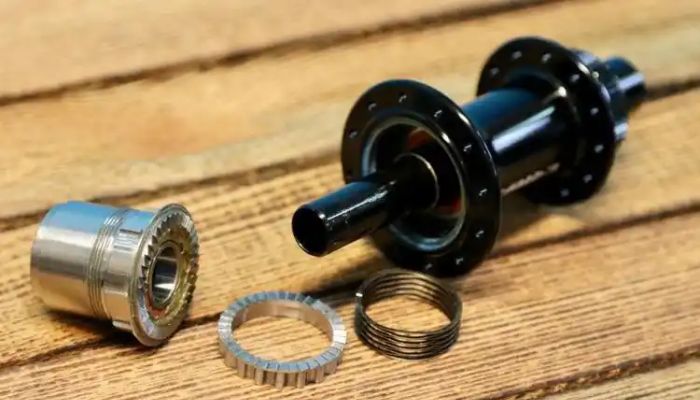
Carbon fiber and epoxy composite reinforcements are generally used in the following areas:
- Aerospace: Applied to the fuselage of UAVs, aircraft fuselages, wings, instrument pods, etc. using composite carbon fiber materials, can greatly reduce fuel consumption.
- Automobile manufacturing: Carbon fiber materials are used in the body, doors, steering wheel, car base, and automotive brake systems.
- Sports equipment: Bicycle frames, helmets, golf clubs, paddles, and other outdoor sports equipment.
- Medical equipment: Carbon fiber composites can also be used in prosthetics, X-ray machines, CT scanning instruments, and so on.
Aluminum is generally used with alloy metals to produce aluminum alloys, which are also widely used:
- Construction: Aluminum alloys are an excellent choice for doors, windows, exterior wall decorations, and other large and small building structural parts.
- Electronics: Because of its excellent electrical conductivity, wires and cables made of aluminum alloy can provide great electrical conductivity. Aluminum alloys can also be used in electronic components, conductors, etc.
- Food Processing: It can be used to make containers for canned food, cans for carbonated beverages, aluminum foil used for packaging, etc.
- Aerospace& automotive manufacturing: Aluminum alloys play an important role in the frames of automobiles and airplanes, structural parts such as doors, windows, interiors, doors, engine casings, and other structural parts.
6. Combined Application of Two Materials

Mixed Design
- Carbon Fiber + Aluminum Honeycomb Panel: Carbon fiber panels on both sides receive tensile strength, stiffness, and fatigue strength from external forces and are also corrosion resistant. The aluminum honeycomb core provides sound and heat insulation, absorbs energy, and receives shear strength.
- Carbon Fiber + Aluminum High-Performance Bicycle: Choose to use carbon fiber in the main bearing parts of the bicycle, such as the frame, handlebars, seat, etc. Choose aluminum in the connecting part of the car (which can reduce the body weight, help riders improve efficiency, and reduce energy consumption. Strengthen the body’s anti-collision strength. That can also reduce costs).
3D Printing Fusion:
Carbon Fiber Reinforced Aluminum Matrix Composites (CFRAMC): A new type of reinforced composite material formed by uniformly embedding carbon fiber material into the aluminum matrix. It has the advantages of high strength, fatigue resistance, lightweight, and high-temperature resistance. Due to its excellent characteristics, it can be applied to the frame structure of the aircraft, which greatly improves the strength and reduces the weight and fuel consumption.
8. Conclusion
Should you choose carbon fiber or aluminum? You need to consider not only their performance. You also need to consider their cost and, most importantly, the industry in which you want to use these materials for your project or product. Overall, these two materials have their unique characteristics and advantages, there is no good or bad, only to use them in the most appropriate areas to give full play to their original value.
FAQ:
- Is carbon fiber better than aluminum?
Carbon fiber has high strength, low density, high chemical stability, and high-temperature resistance. The disadvantages are brittle, high cost, and complex processing.
Aluminum has good electrical and thermal conductivity, is low cost, and is easy to process. The disadvantage is fatigue resistance is not good, easy to deform, easy to corrode and rust.
So these two materials can not simply say which one is better, you need to compare from different dimensions, to find more suitable for your products and applications of the material.
- Does carbon last longer than aluminum?
Carbon fiber is much more resistant to fatigue and corrosion than aluminum, so the product does not require maintenance. Aluminum is easy to fatigue deformation and anti-corrosion rust, later need to maintain their products for corrosion. Therefore, carbon fiber products have a longer life than aluminum products.
- Is carbon fiber stronger than aluminum?
Carbon fiber has an ultra-high strength-to-weight ratio, high fatigue strength, corrosion resistance, and chemical resistance, all of which make carbon fiber stronger than aluminum.
 English
  Japanese
  German
  Spanish
  French
  Italian